
Watch Premier League 2026-27 Fixtures
Key Takeaways
- The 2026/27 season kicks off Friday 21 August 2026 and runs to Sunday 30 May 2027, pushed back a week because of the 2026 World Cup.
- Sky Sports and TNT Sports split the UK’s 267 live matches between them. Amazon Prime Video is out of the picture after losing its rights in the 2025/26 cycle.
- BBC’s Match of the Day still carries free highlights of all 380 games, but roughly 180 fixtures a season, mostly Saturday 3pm kick-offs, aren’t shown live anywhere in the UK.
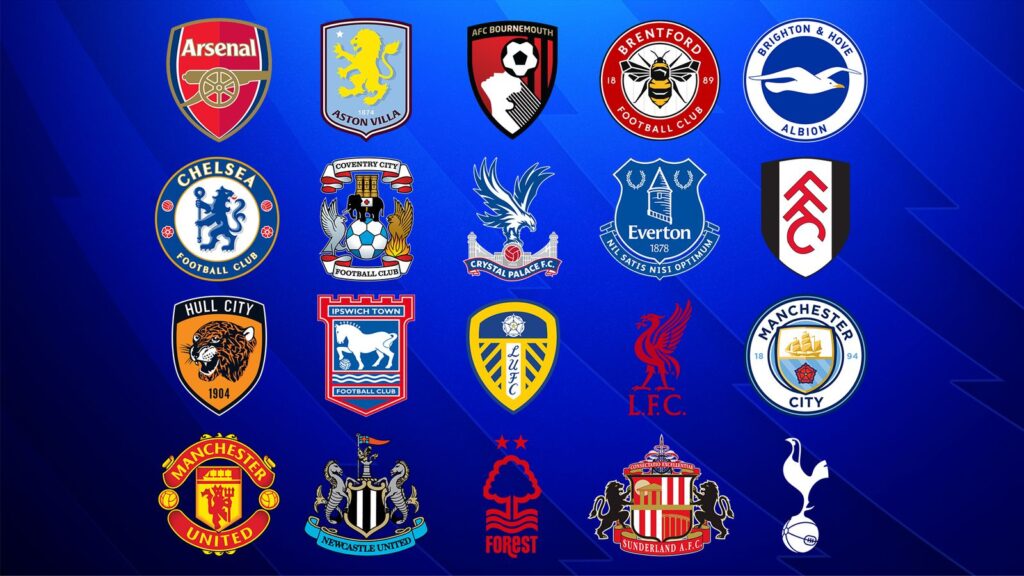
- Coventry City, Ipswich Town and Hull City come up from the Championship. West Ham, Burnley and Wolves go the other way.
- Watching Sky and TNT separately means two logins, two apps, two bills. An IPTV setup through something like ZumTV puts your existing subscriptions on one screen.
- Parental controls, EPG scheduling and multi-device access all run through third-party player apps such as IPTV Smarters Pro or TiviMate, not through the broadcaster apps themselves.
Fixtures dropped on 19 June, and the Premier League app has been busy ever since. If you’re a football fan trying to work out how the new season actually reaches your telly, the honest answer is a bit more fiddly than “just turn on Sky”. Two broadcasters hold the rights. One is free. And a good chunk of matches never touch a screen at all. Here’s the full picture and where IPTV setups like ZumTV actually help.
When the 2026/27 Season Kicks Off
The Premier League confirmed the new campaign opens on Friday, 21 August 2026, with the bulk of matchweek one played that Saturday. That’s a week later than the usual mid-August start. Blame the World Cup. With the tournament running through North America over the summer and wrapping up in mid-July, the Premier League needed extra breathing room for players heading straight from international duty into pre-season.
The season closes on Sunday 30 May 2027, again a week later than normal, with all ten matches kicking off simultaneously as always. That gives clubs 89 clear days between the end of 2025/26 and matchday one and a full month between the World Cup final and the Community Shield.
Speaking of which, the traditional curtain-raiser between champions Arsenal and FA Cup winners Manchester City happens on Sunday 16 August at Principality Stadium in Cardiff rather than Wembley, a scheduling quirk worth noting if you’re planning a trip around it.
Thirty-three weekend rounds and five midweek rounds make up the calendar. Nothing unusual there. What’s changed is the squeeze at both ends of the season, and that has knock-on effects for how TV selections get made in the opening weeks.
Who’s Up, Who’s Down
Arsenal go into the new season as champions for the first time in 22 years, finishing seven points clear of Manchester City after a title race that swung late. Man City, Manchester United, Aston Villa and Liverpool round out the Champions League places. Bournemouth and Sunderland head into the Europa League, with Brighton picking up the Conference League spot.
Coventry City return to the top flight after a 25-year absence, running away with the Championship title under Frank Lampard. Ipswich Town bounce straight back after a single season down, beating Southampton to second place on the final day. Hull City complete the trio, edging past Middlesbrough in a play-off final decided by a stoppage-time winner.
Going down: West Ham United, whose 14-year top-flight run ended on the final day despite a 3-0 win over Leeds, was undone by Tottenham’s result elsewhere. Burnley and Wolves were both down before the last round of matches was even played.
None of this changes how you watch. But it does shape which fixtures get the big TV slots early on. Newly promoted sides with strong away followings and the novelty of a club like Coventry being back among the elite after a generation away tend to pull decent picks from broadcasters in the season’s first few months.
Watch Premier League 2026-27 Fixtures: How to Watch Every Match on IPTV in the UK: Sky Sports, TNT Sports and the BBC Highlights Deal
Here’s where it gets genuinely confusing for anyone who hasn’t kept up with the rights shuffle. Since the current four-year cycle began in 2025/26, the picture looks like this.
Sky Sports holds the lion’s share: a minimum of 215 live matches a season, which works out to more than 140 weekend fixtures plus Friday and Monday night games and full coverage of three midweek rounds. Sky also shows all ten matches on the final day, something that used to be split across broadcasters.
TNT Sports carries 52 live matches, built mostly around the Saturday 12:30pm slot plus selected Saturday evening fixtures and two midweek rounds. TNT also holds the Champions League, so if your household follows European football too, that’s the other subscription you’re weighing up.
Amazon Prime Video is no longer in the mix. The 20 matches it used to show, typically the December boxing-week bundle, moved to TNT Sports when the new rights deal was finalised. If you’ve been holding onto a Prime subscription purely for the odd Premier League match, that reason no longer applies.
BBC doesn’t show live matches, and it never has under the current rules, but it holds highlights rights for all 380 games through at least 2029. Match of the Day remains free, funded by the licence fee, and runs Saturday evenings with Sunday and Monday follow-ups when there’s enough midweek action to justify it.
Between Sky and TNT, that’s 267 live matches a season out of 380. Up from 200 under the previous deal, which sounds like progress until you look at what’s still missing.
The Saturday 3pm Blackout Nobody Talks About
Roughly 180 Premier League matches a season, most of them Saturday 3pm kick-offs, aren’t broadcast live in the UK at all. Not on Sky. Not on TNT. Not on the BBC. This isn’t a rights gap or an oversight. It’s a deliberate rule, in place since the 1960s, designed to protect matchday attendance across English football by keeping the traditional Saturday afternoon slot off live television.
It catches a lot of people out, especially newer fans who assume that if a match is happening, it’s on somewhere. It genuinely isn’t, and no legitimate streaming service, including ZumTV, can show you a blacked-out fixture live. Anyone offering that access is either showing you something without the rights to do so, or lying about what you’re actually getting. Worth knowing before you go hunting.
What you can do with those matches is catch the Match of the Day highlights that evening, follow along with radio commentary, or use in-play text updates through the club or league app. Not the same as watching live, but it’s the honest state of play.
Watching Sky Sports and TNT Sports Without Two Separate Contracts
This is the bit that actually affects your Saturday. If you want full live coverage across both broadcasters, you’re looking at two separate subscriptions: a Sky Sports package (either through a Sky box or NOW’s streaming pass) and a TNT Sports subscription via Discovery+. Two apps, two logins, two payment dates, and if you’re moving between a Fire Stick, a smart TV and a phone, you’re often juggling app switching mid-match too.
An IPTV setup, like the one ZumTV runs, doesn’t replace those subscriptions or claim to hold Premier League broadcasting rights itself. What it does is give you one interface, one guide, and one app across every device in the house, so the channels you’re already paying to access sit in a single place instead of scattered across separate apps. If your household has Sky Sports and TNT Sports between two different streaming boxes right now, that’s the specific headache this kind of setup is built to solve.
It’s worth being direct about this: ZumTV is a companion streaming layer, not a broadcaster and not a rights holder. It doesn’t unlock content you haven’t already got legitimate access to, and it can’t touch the 3pm blackout matches any more than Sky or TNT can. What it changes is convenience, not access.
Setting Up IPTV for Premier League on Your Devices
Most households running IPTV do it through one of a handful of setups: a Fire TV Stick, an Android TV box, a smart TV with a native app, or a phone and tablet for catching matches on the move.
The Fire Stick remains the most common entry point simply because it’s cheap and plugs into any HDMI port. Setup typically means installing a third-party player app such as IPTV Smarters Pro or TiviMate, loading your provider’s playlist, and letting the electronic programme guide populate. That EPG matters more than people expect. It’s what lets you scroll ahead and see which channel is showing kick-off at 3pm on Saturday instead of guessing.
Parental controls are worth flagging because they don’t sit inside ZumTV itself. They’re a feature of the player app you choose; IPTV Smarters Pro and Tivimate both support PIN-locked channel restrictions, so if you’ve got kids who might stumble onto something they shouldn’t during a match break, that setting lives in the app, not the streaming service.
For multi-device households, the practical tip is to test your connection on the device you’ll actually use during a live match, not just at setup. Buffering shows up under load, and a Saturday afternoon with three separate Premier League kick-offs running across the country puts real strain on both your home broadband and the wider network. A wired connection to your router, where that’s an option, beats Wi-Fi every time for a match you don’t want to miss a goal in.
Fixture Highlights Worth Circling Early
A few dates from the opening months stand out. The traditional big-six fixtures always draw the best broadcast slots, and early meetings between title contenders tend to land on Sky’s marquee Sunday afternoon window rather than the more modest TNT Saturday lunchtime spot.
Watch too for how the newly promoted clubs get treated. Coventry’s first home game back in the top flight after 25 years, and Hull’s return after nearly a decade away, carry enough narrative weight that broadcasters usually schedule them for a live slot even outside the obvious rivalries. It’s good television, and TV selection panels know it.
The Community Shield on 16 August offers an early look at Arsenal’s title defence against a Manchester City side that will already be plotting a response. It’s not a Premier League fixture in the strictest sense, but it’s the first proper viewing of the season, and it’s shown live on Sky Sports.
What Happens When Matches Get Rescheduled for TV
Fixture dates released in June are provisional past the first few weeks. Once broadcasters lock in their picks, usually about six weeks ahead of each round, kick-off times and even days can shift. A Saturday 3pm fixture can move to Sunday 2pm, or a midweek round can get spread across two evenings instead of one, all driven by which games the broadcasters want in their best slots.
This is where an EPG that updates automatically earns its keep. Manually checking three different apps for a schedule change is tedious. A properly synced IPTV guide reflects broadcaster changes without you having to dig through separate release schedules from Sky and TNT individually.
If a fixture you’re planning around does move, both Sky Sports and TNT Sports publish rescheduling confirmations directly on their own sites, and that’s the source worth checking rather than aggregator listings, which have a habit of running stale information for days after a change goes live.
What Full Coverage Actually Costs
It’s worth laying this out plainly, because the pricing picture across Sky and TNT changes every year, and most comparison articles gloss over it.
A Sky Sports package through NOW typically runs somewhere in the £30 to £35 a month range for a rolling monthly pass, cheaper if you commit to a longer contract through a Sky TV bundle. TNT Sports sits separately through Discovery+, generally in the £30-a-month territory on its own, though it’s often bundled at a discount if you’re already a Sky customer, since the two broadcasters have a long-standing wholesale arrangement.
Add them together, and a household chasing full live coverage, Sky plus TNT, is realistically looking at £50 to £65 a month once you strip out promotional pricing that only applies to the first few months. That’s before you’ve paid your TV licence, which is a separate £169.50 a year and non-negotiable if you’re watching any of it live.
This is the actual reason so many households end up cobbling together an IPTV setup instead of running both broadcaster apps natively. It’s not that the content is different. It’s that managing two subscriptions, two remembered logins, and two apps that don’t talk to each other gets old fast, especially in a household where more than one person wants to watch different matches on different devices at the same time. A single IPTV interface through something like ZumTV doesn’t reduce what you’re paying to Sky and TNT for the underlying rights, but it does mean the family doesn’t need to remember which app has which match, or juggle two remotes to find kick-off.
Where households can genuinely save money is by being honest about what they watch. If your viewing is mostly Saturday 3pm-adjacent games and midweek football rather than the marquee Sunday slots, a TNT-only subscription paired with BBC highlights might cover most of what you actually care about without paying for the full Sky package on top.
Does Amazon Prime Video still show any Premier League matches?
No. Amazon lost its UK live rights when the current four-year deal began in 2025/26. Those fixtures moved to TNT Sports. Prime Video is no longer a route to live Premier League football in the UK.
Can I watch every Premier League match live somewhere in the UK?
No, and this catches a lot of new fans out. Around 267 of the 380 matches each season are shown live across Sky Sports and TNT Sports. The rest, roughly 180 fixtures, mostly fall in the Saturday 3pm blackout window and aren’t broadcast live anywhere, legally, in the UK.
Do I need a TV licence to watch Premier League football?
Yes, if you’re watching any live television broadcast, including Sky Sports and TNT Sports, or using BBC iPlayer. The TV licence applies regardless of the device or app you’re watching through.
Does ZumTV hold Premier League broadcasting rights?
No. ZumTV is a companion IPTV layer that brings your existing subscriptions together on one interface across your devices. It doesn’t hold or claim broadcasting rights to Premier League football, and it can’t show fixtures that no UK broadcaster is showing live.
What’s the best device for watching Premier League IPTV?
A Fire TV Stick or Android TV box paired with a player app like IPTV Smarters Pro or TiviMate covers most households. For the smoothest experience during live matches, a wired ethernet connection to your router outperforms Wi-Fi, particularly on Saturdays with multiple kick-offs running at once.
Why do some Premier League kick-off times keep changing after the fixtures are released?
Broadcasters lock in their live picks roughly six weeks before each round, and that process can shift kick-off days and times from what was originally published in June. Always check Sky Sports or TNT Sports directly for confirmed times closer to the date.